
When you decide to install a complete knuckle and arm assembly, you are making a commitment to superior strength. However, the next big question most builders face is: What joints should I use to connect the links?
The debate between Heim joints (spherical rod ends) and traditional 1-ton tie rod ends (TREs) is as old as rock crawling itself. Both have a place on a high steer knuckle arm kit Dana 44, but your choice should depend on how you use your rig.
1. 1-Ton Tie Rod Ends: The Street-Legal Workhorse
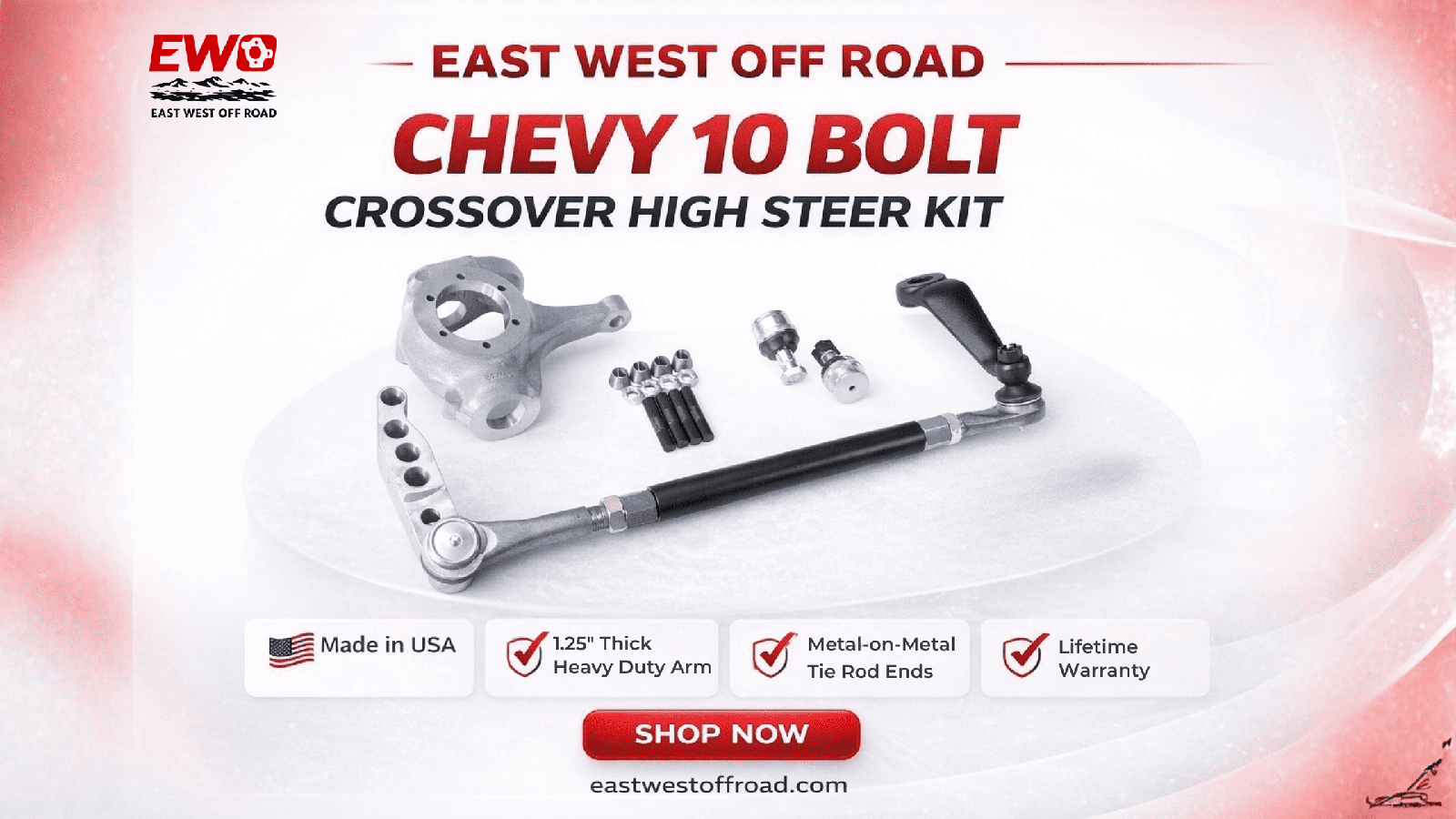
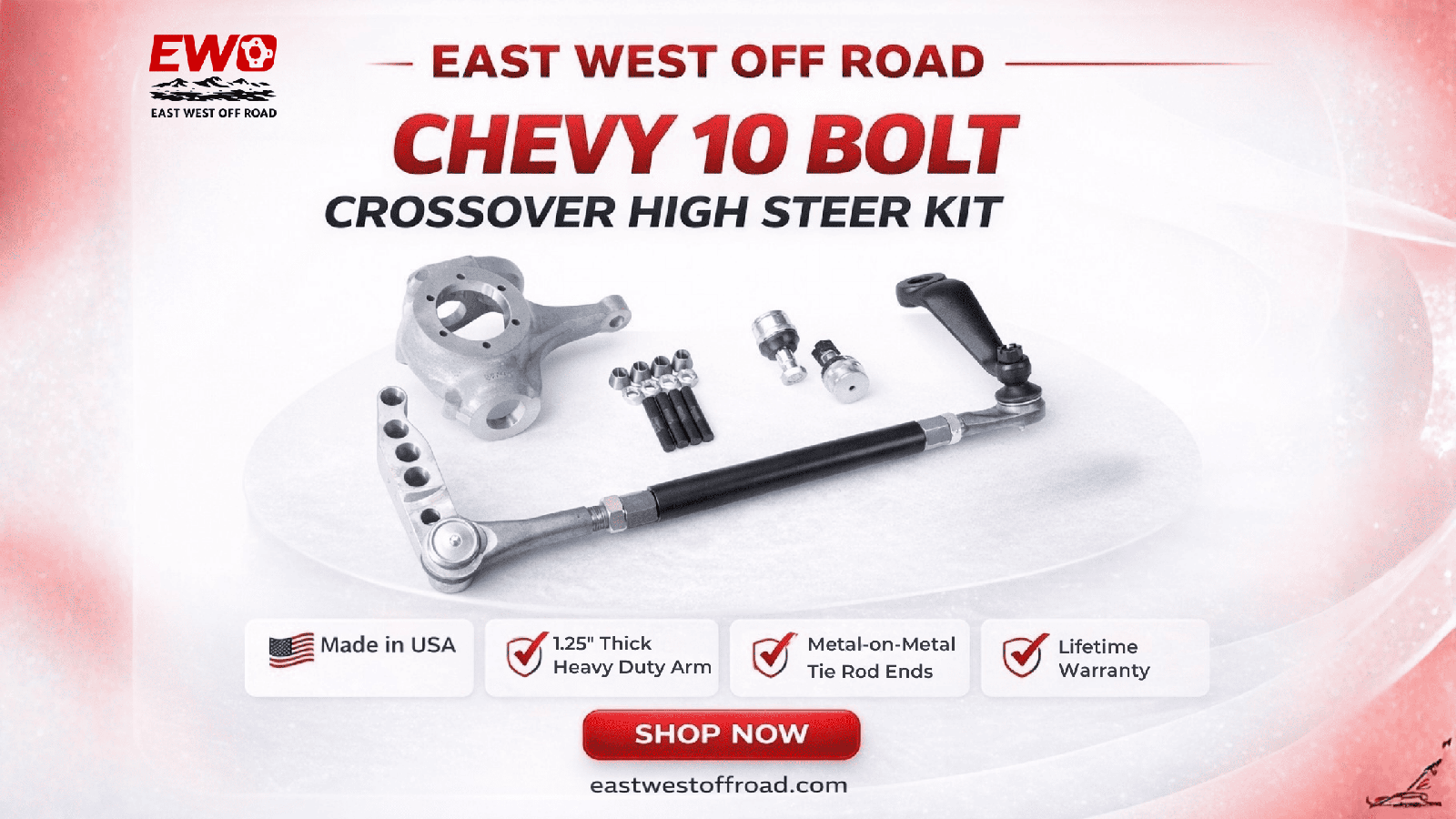
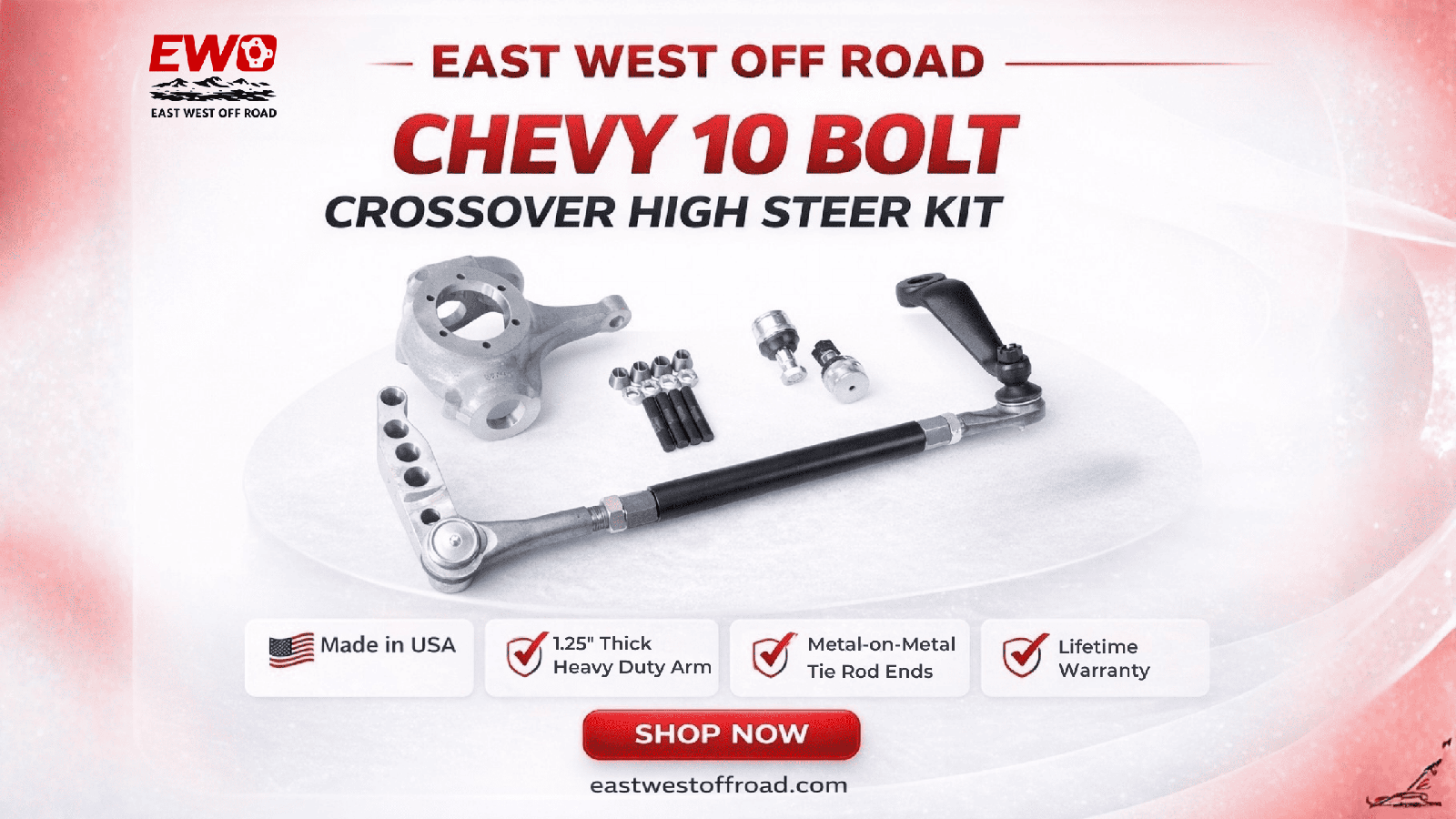
Most Chevy 10 bolt knuckle and arm kits are designed around the classic GM 1-ton offset tie rod end.
Pros:
Self-Centering: Internal springs keep the joint centered, which helps eliminate steering "wander" on the highway.
Longevity: Greaseable boots keep out dirt, salt, and water, making them ideal for daily drivers.
Safety: A TRE usually gives you warning (looseness) before failing completely.
Cons:
Limited Articulation: They have a physical "stop" that can bind during extreme suspension travel.
Size: They are bulky, which can sometimes lead to clearance issues with wheels.
2. Heim Joints: The Rock Crawler’s Choice
Heim joints are the go-to for custom buggies and high-articulation rigs utilizing a flat top Dana 44 knuckle kit.
Pros:
Massive Articulation: When paired with high-misalignment spacers, Heims can pivot much further than a TRE without binding.
Strength: A 7/8" or 3/4" chromoly Heim joint often has a higher radial load rating than a standard tie rod end.
Versatility: They are easy to mount to a 1.25 inch thick high steer arm using a straight bolt rather than a taper.
Cons:
Maintenance: Open Heims hate mud and salt. They can become "clicky" or noisy if not cleaned regularly.
No Forgiveness: They transmit every vibration from the road directly to the steering wheel.
3. The Role of the Reversible Slit Insert
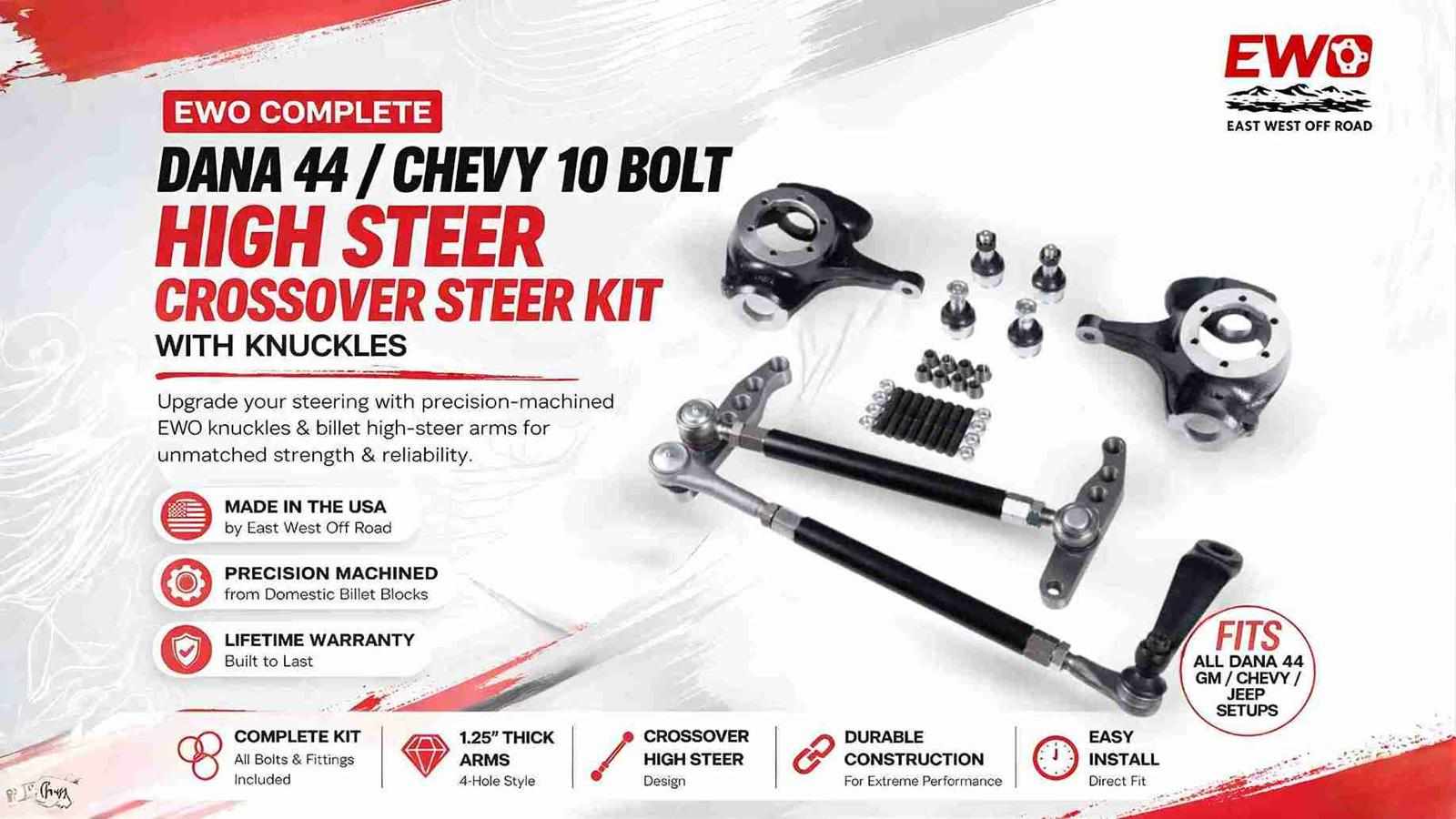
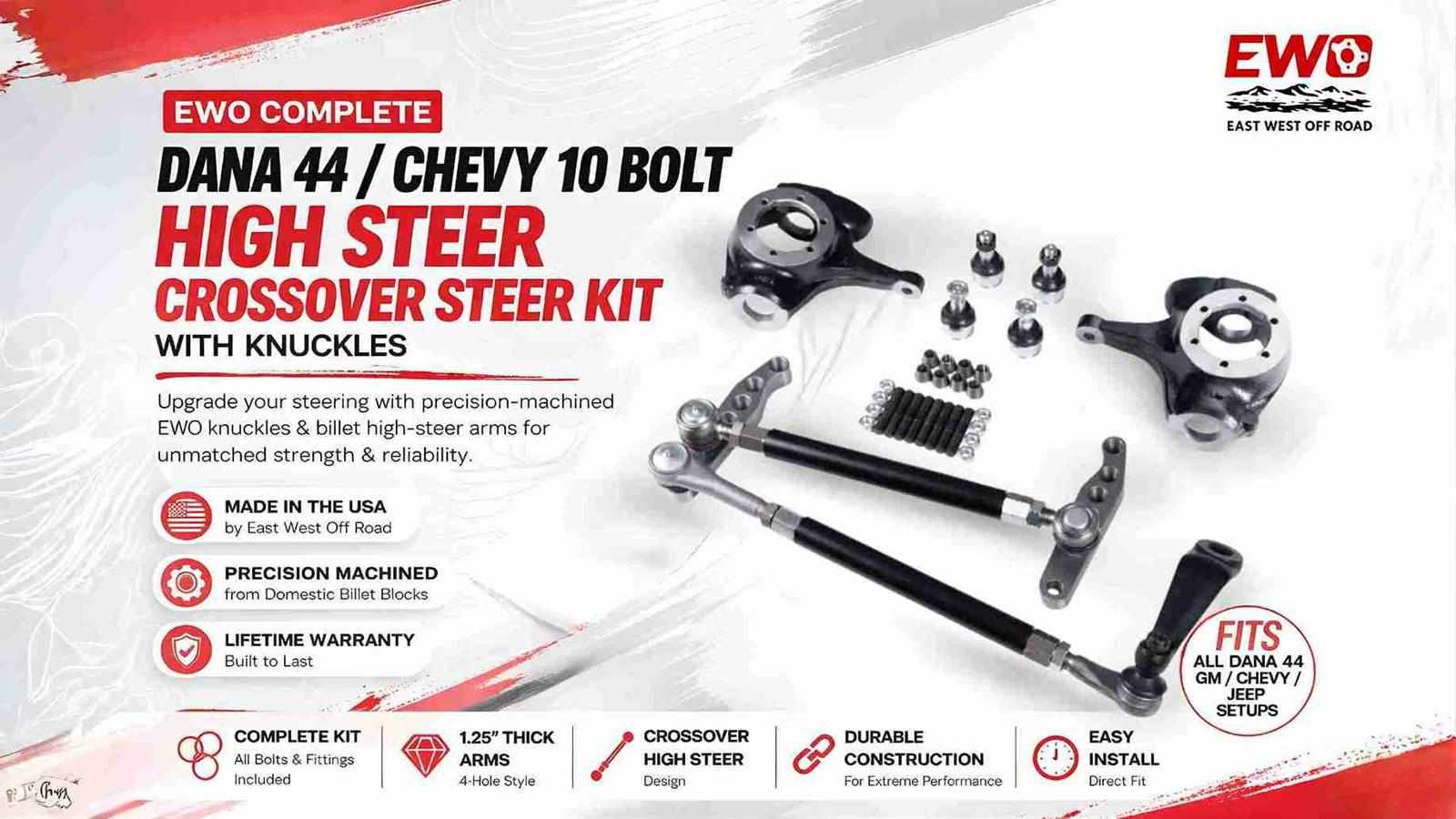
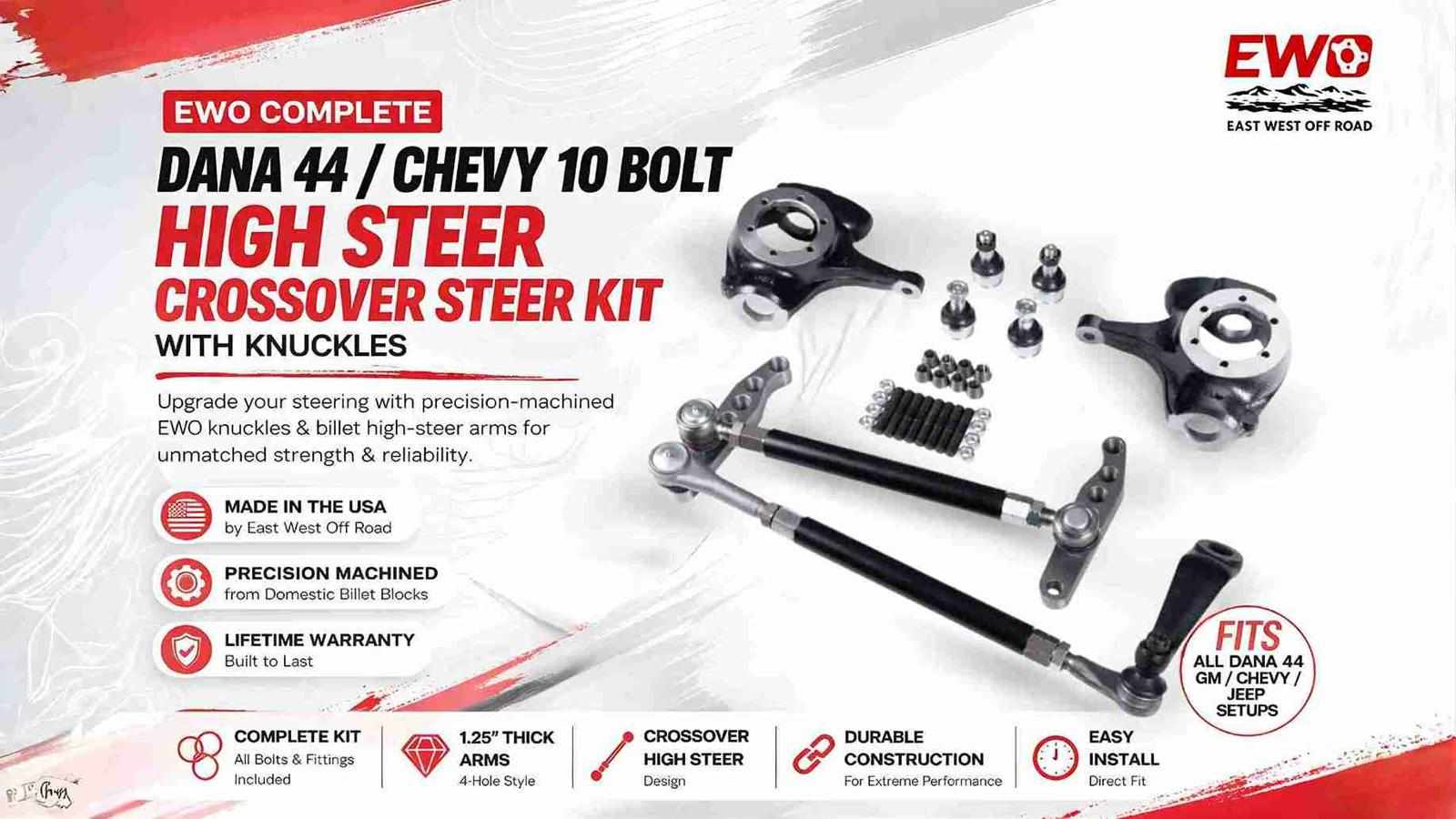
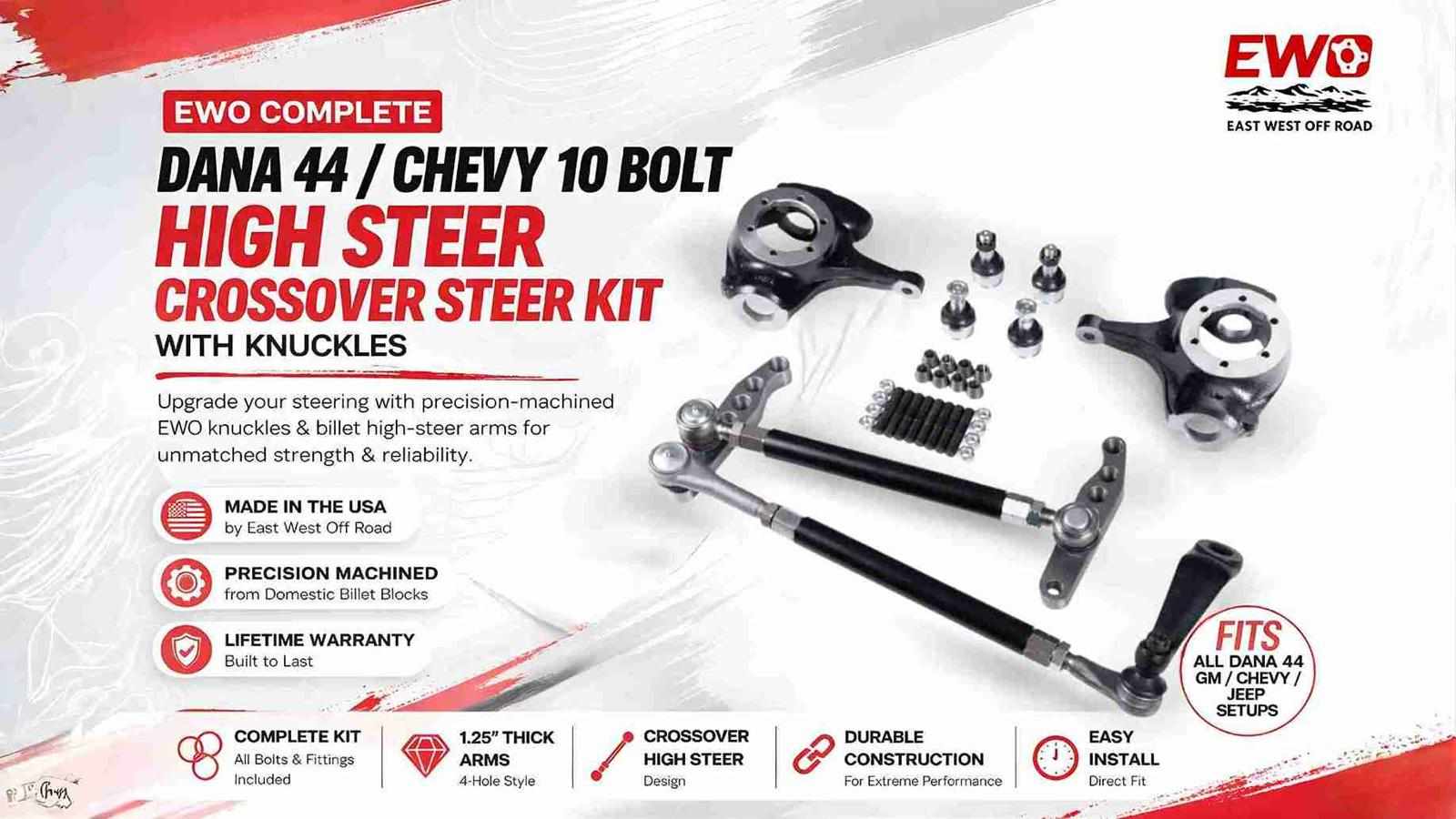
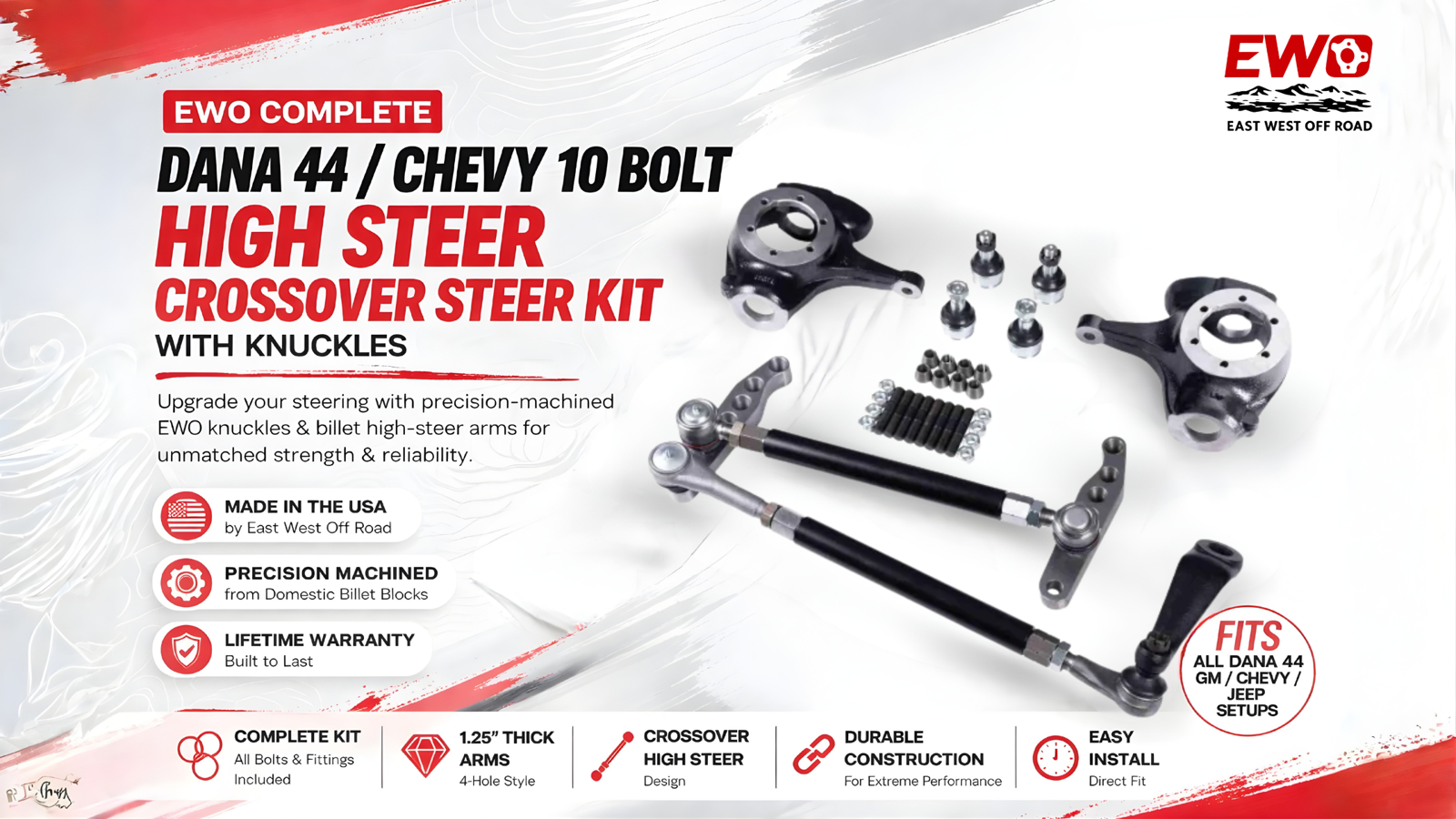
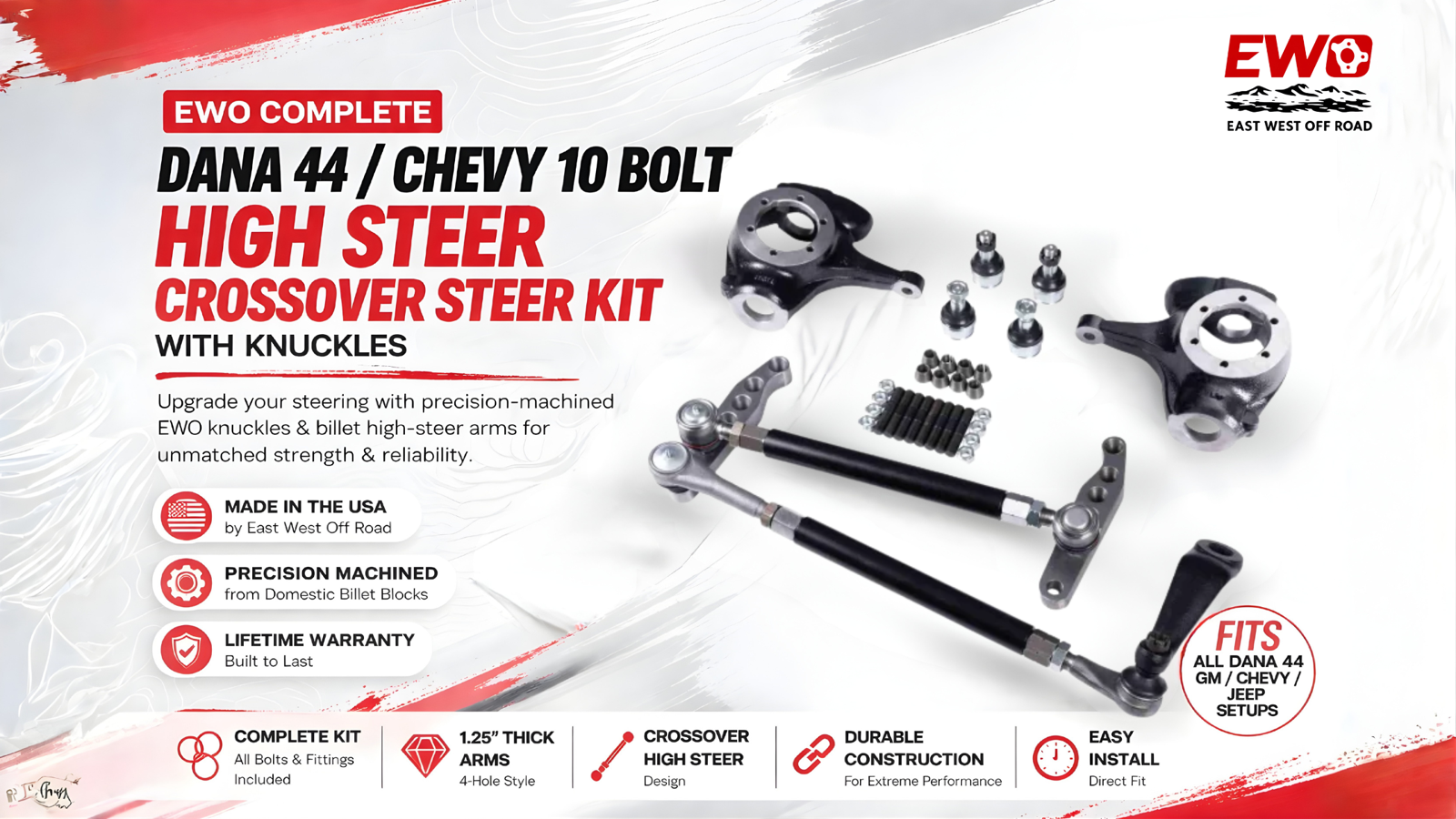
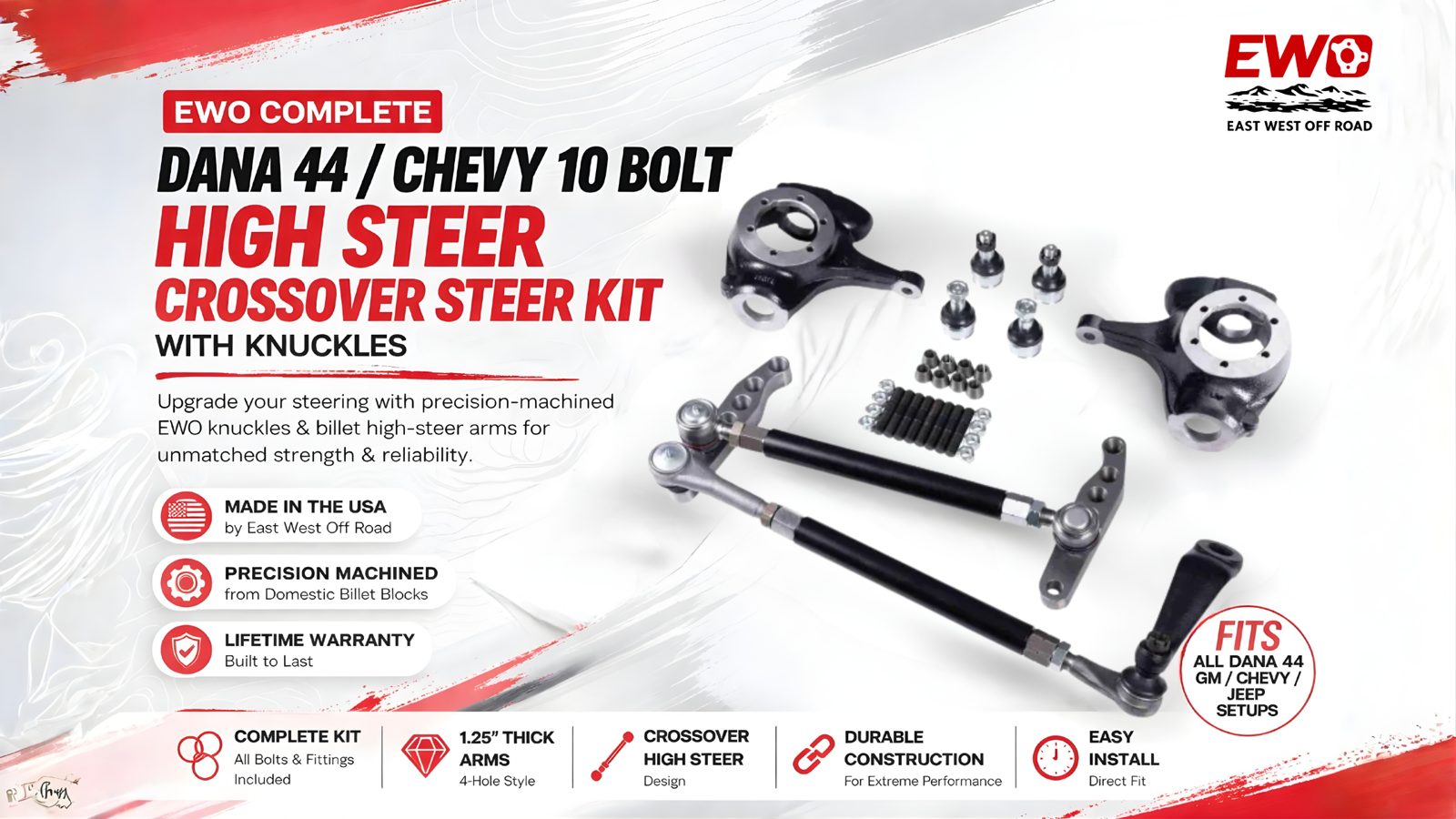
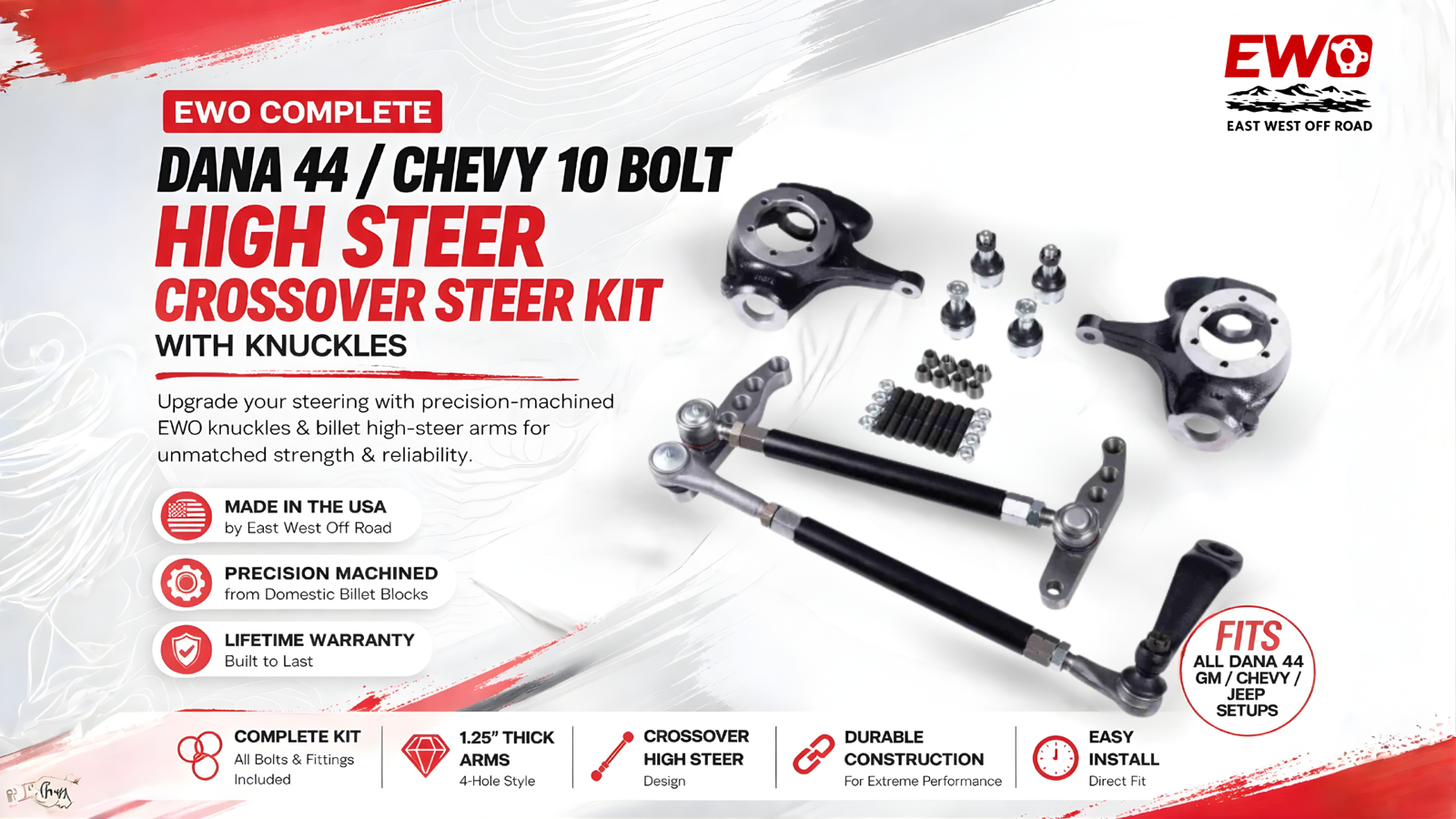
This is where the East West Offroad design shines. Our reversible slit insert knuckle steering system allows you to switch between these two worlds easily.
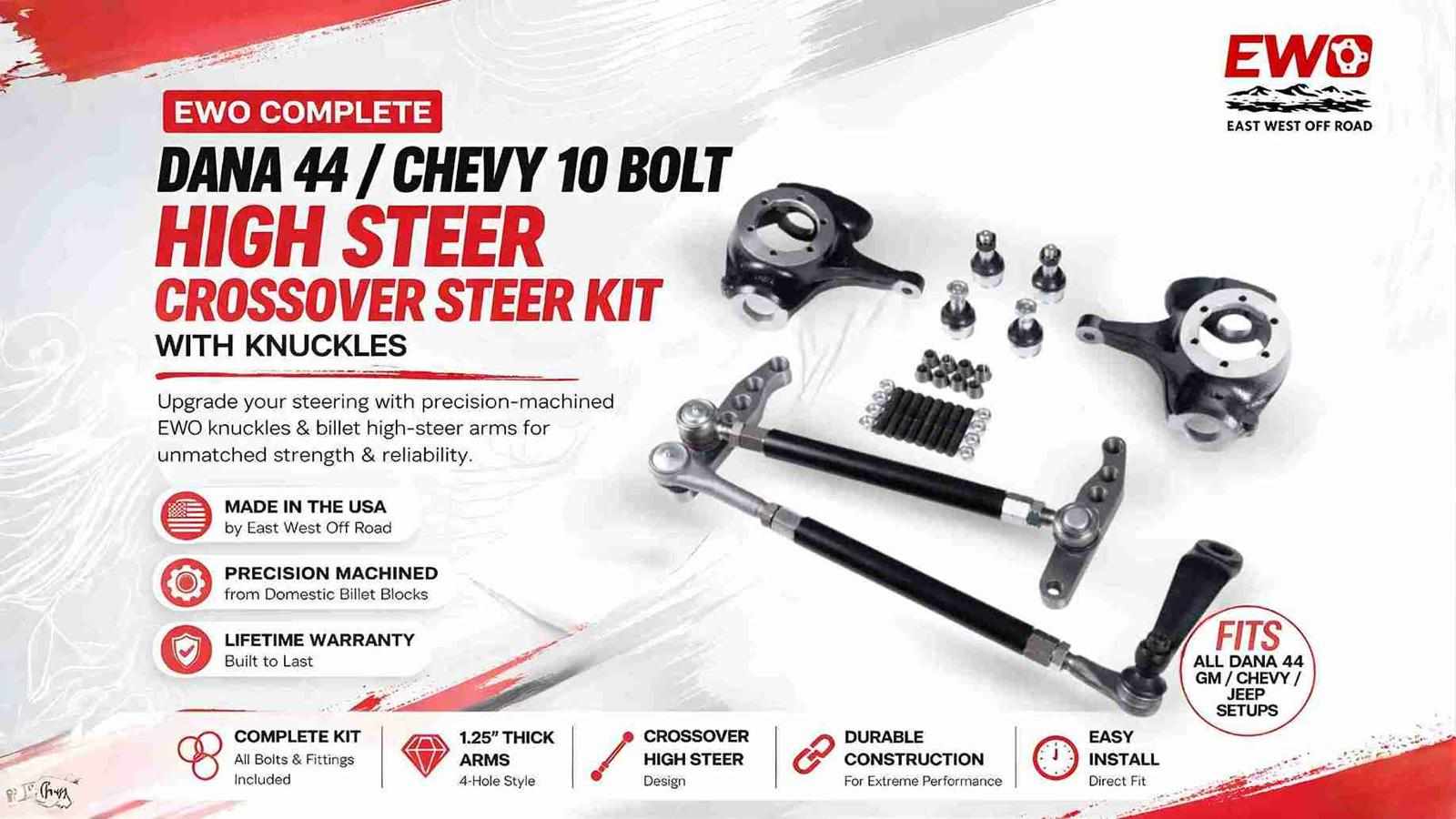
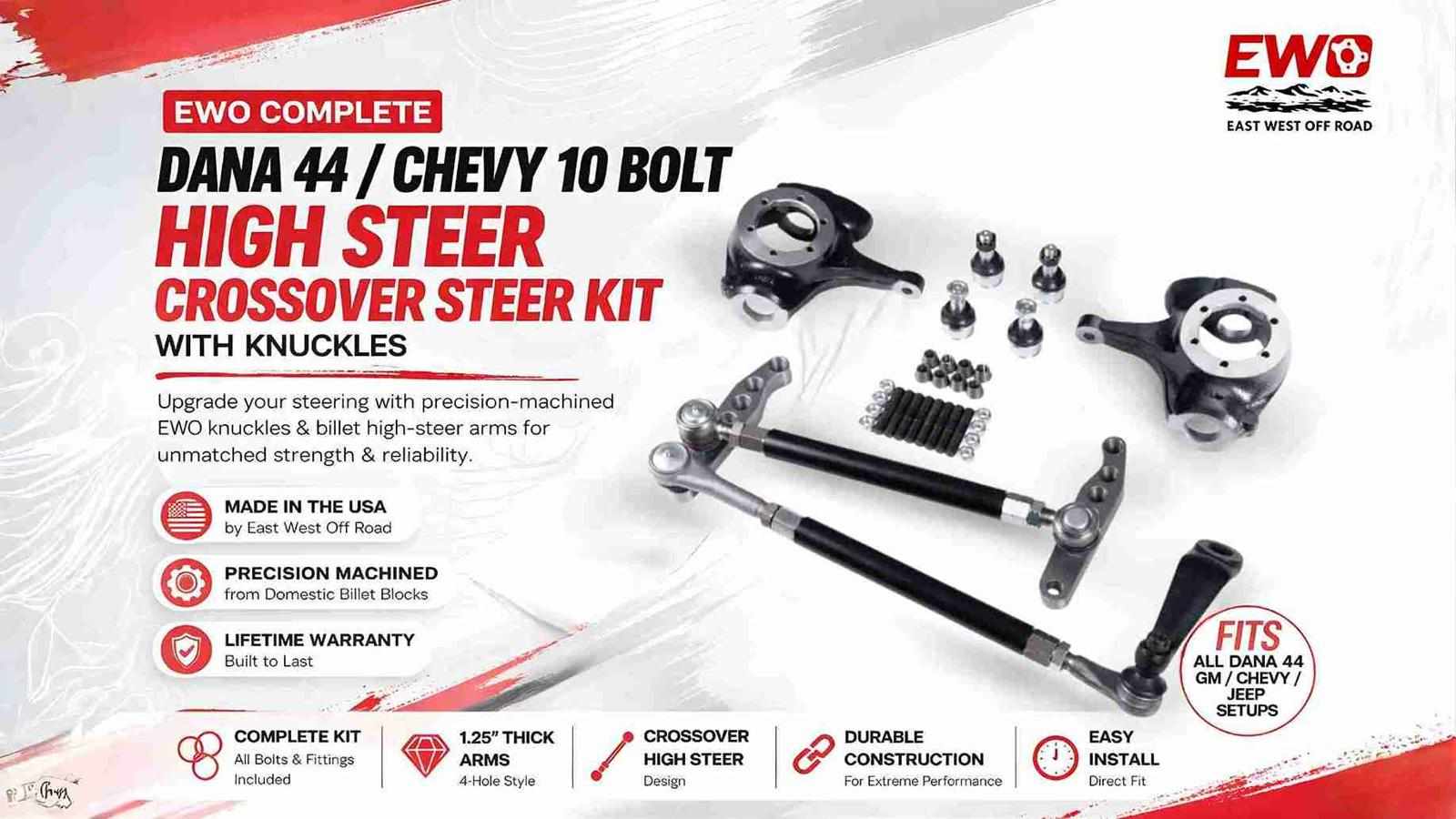
If you start your build with 1-ton tie rod ends for the street but later decide to go full-blown rock crawler with 7/8" Heims, you don't need a new steering knuckle replacement kit. You simply swap the insert to match your new hardware. This flexibility is what makes our USA made Dana 44 knuckles the most versatile in the industry.
Comparison Table: Heim vs. Tie Rod End
Feature
1-Ton Tie Rod End
Chromoly Heim Joint
Best Use Case
Daily Driver / Trail Rig
Dedicated Rock Crawler
Articulation
Moderate
Maximum
Street Comfort
High (Dampens Vibration)
Low (Direct Feedback)
Maintenance
Low (Grease & Go)
High (Clean & Dry Lube)
Installation
Tapered Fit
Straight Bolt / High Misalignment
EWO Compatibility
Yes (Standard Insert)
Yes (Heim Insert)
4. Why 1.25 Inch Arms Matter for Both
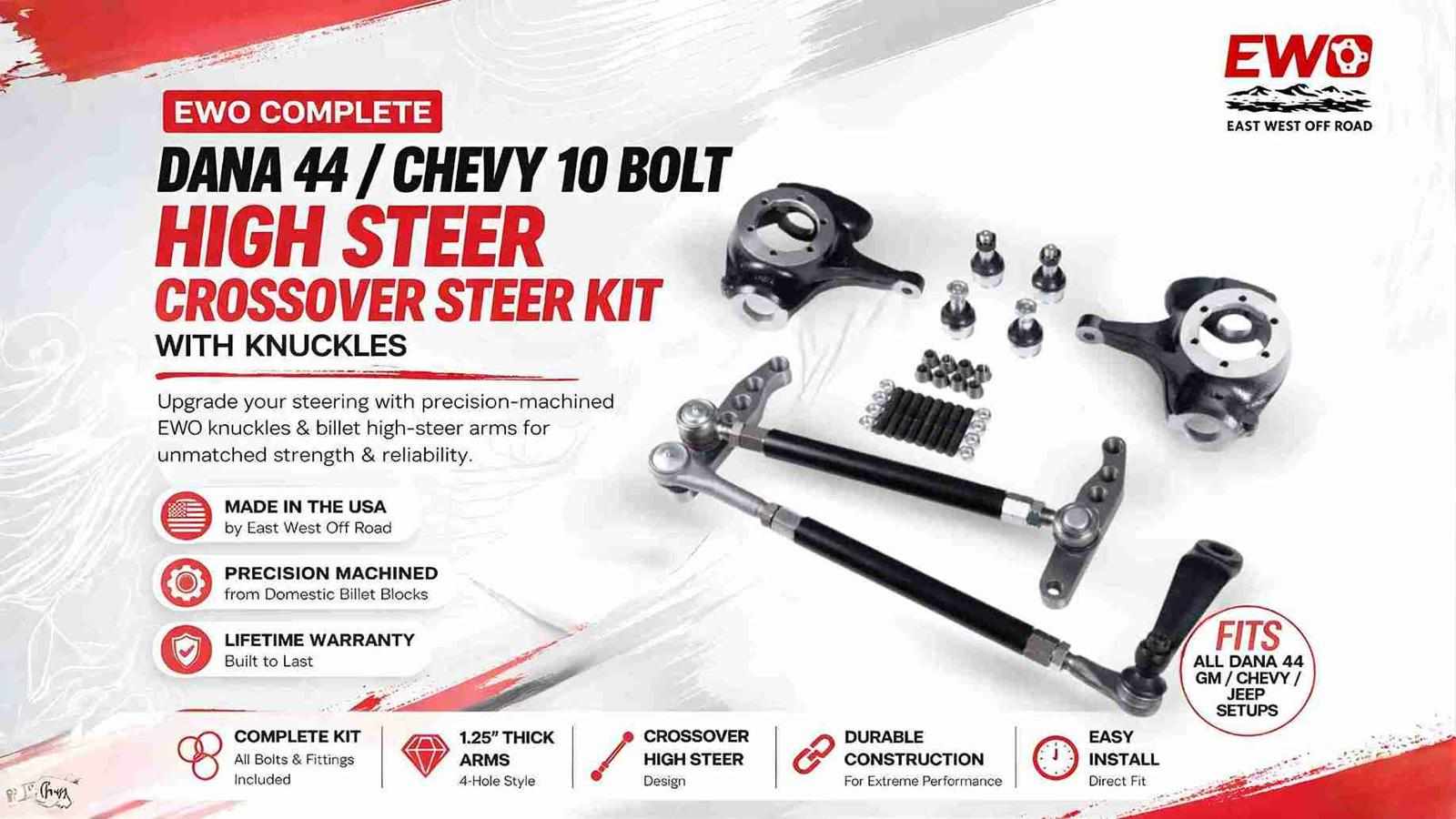
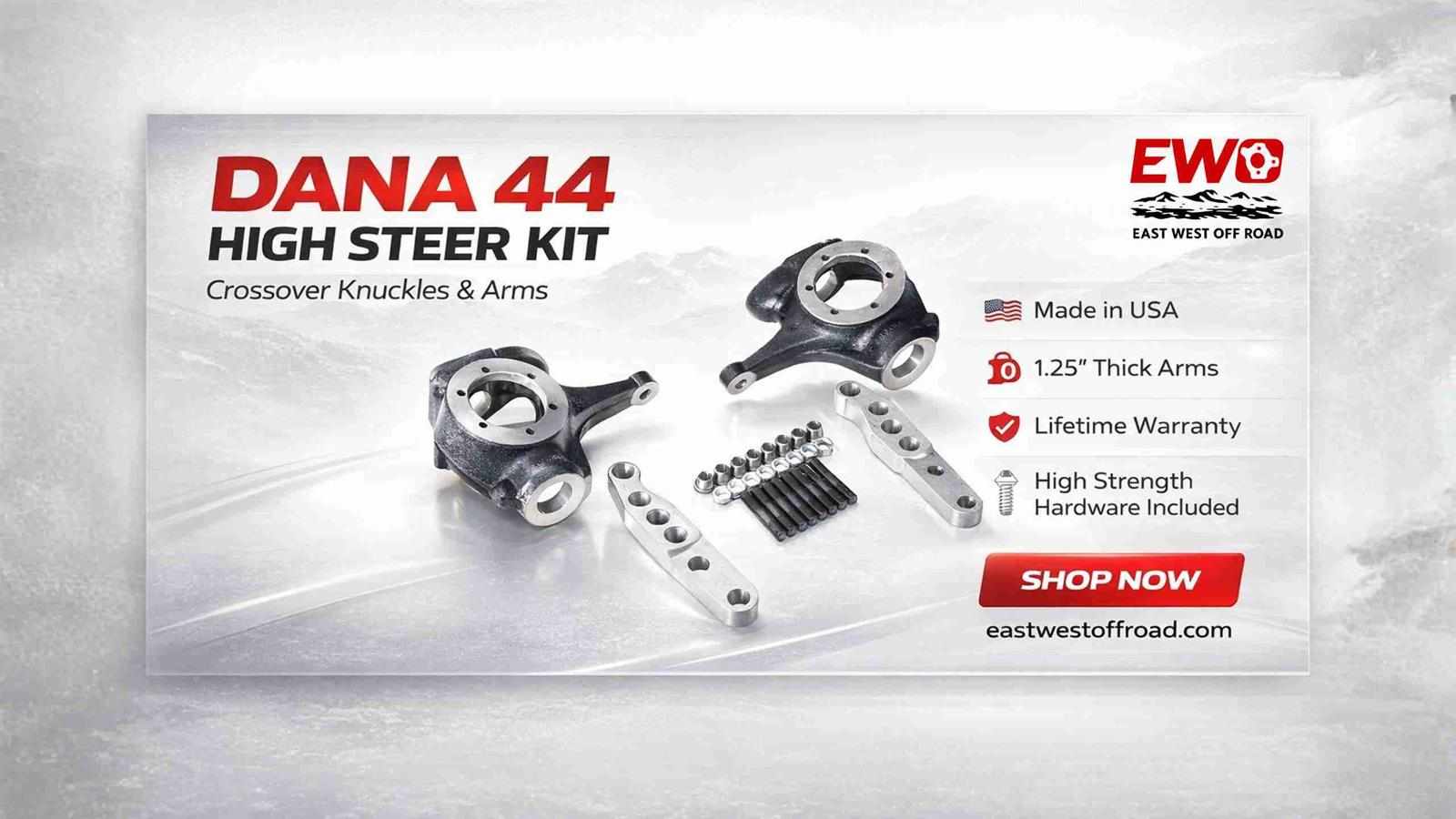
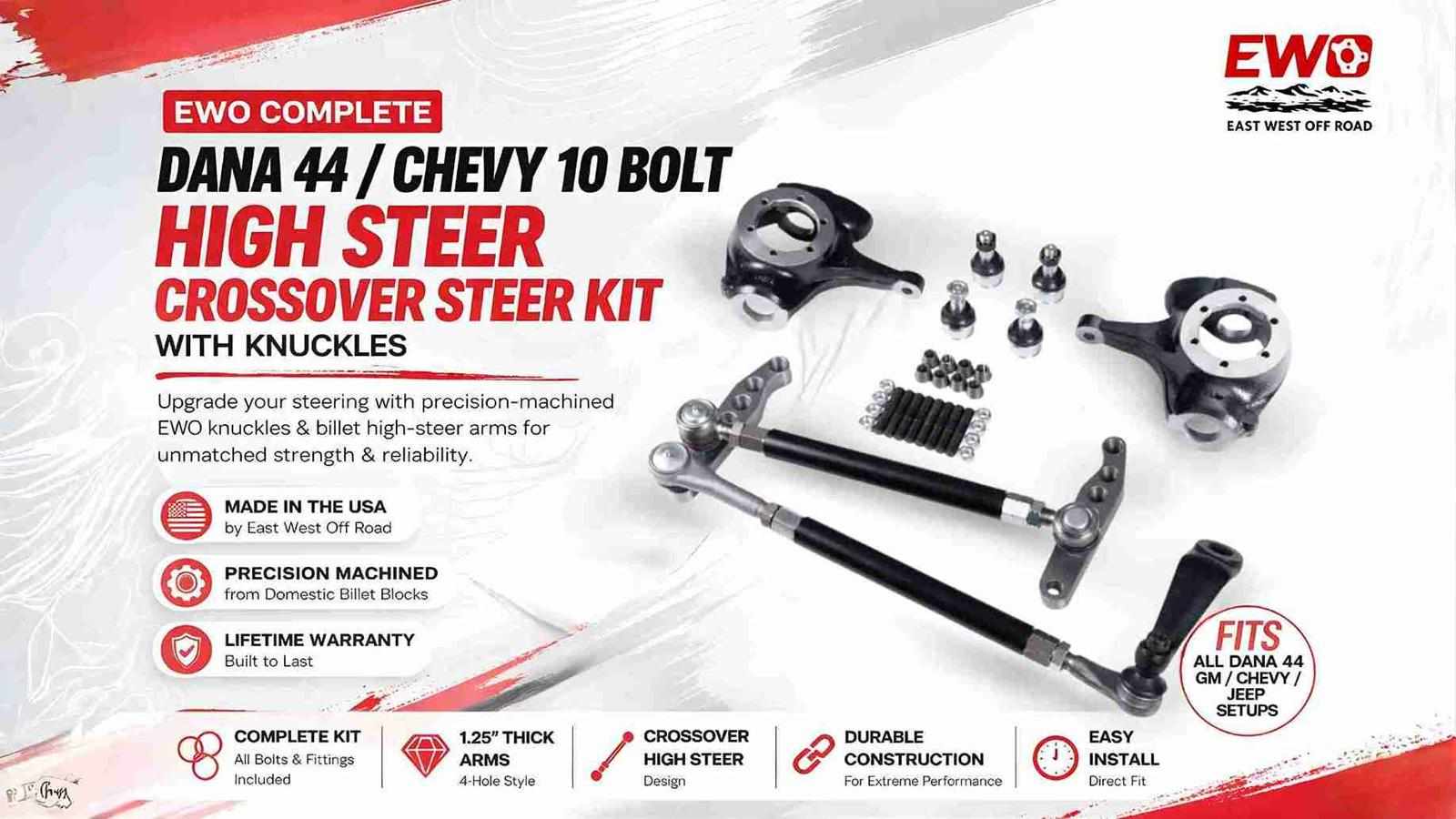
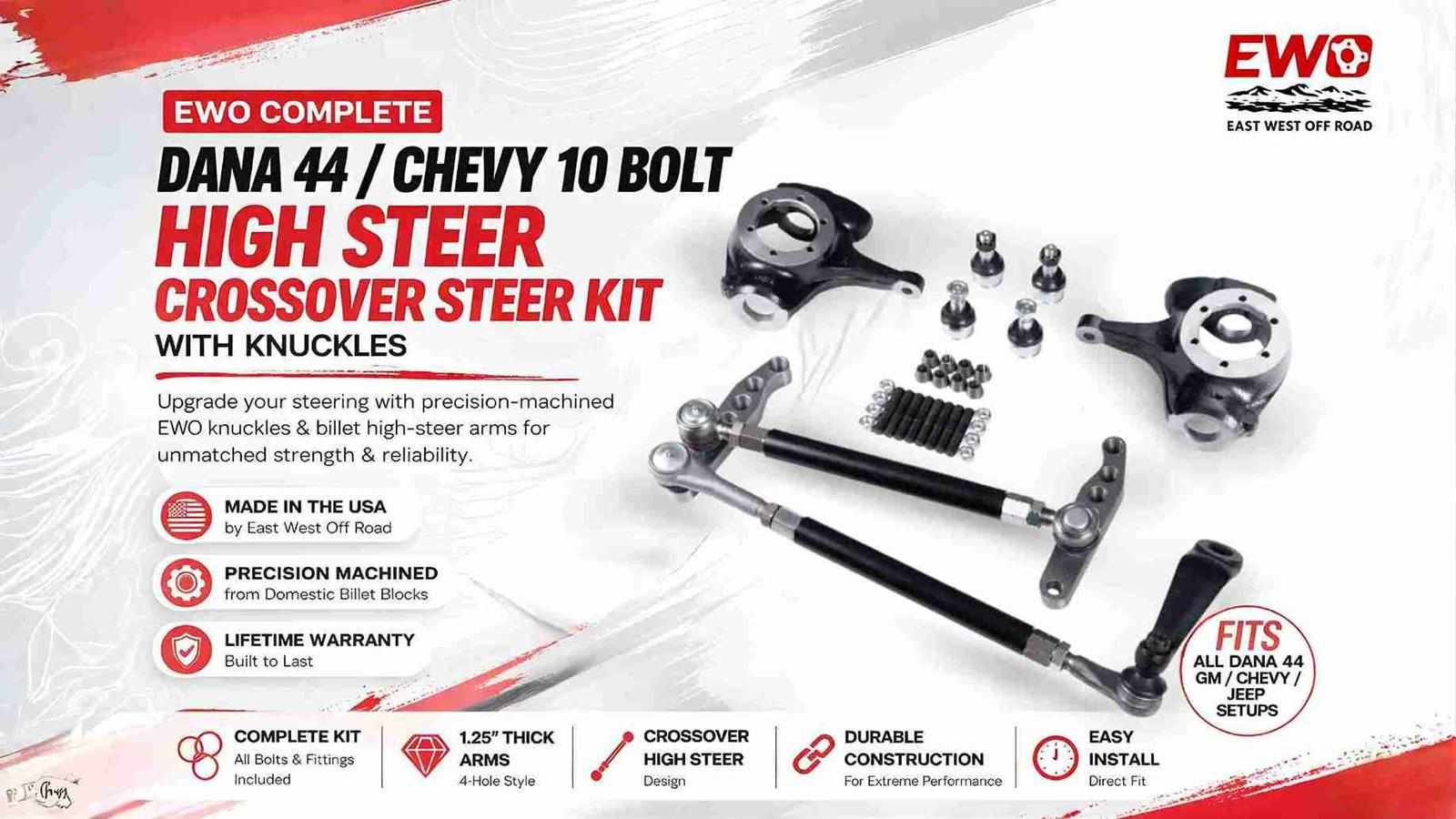
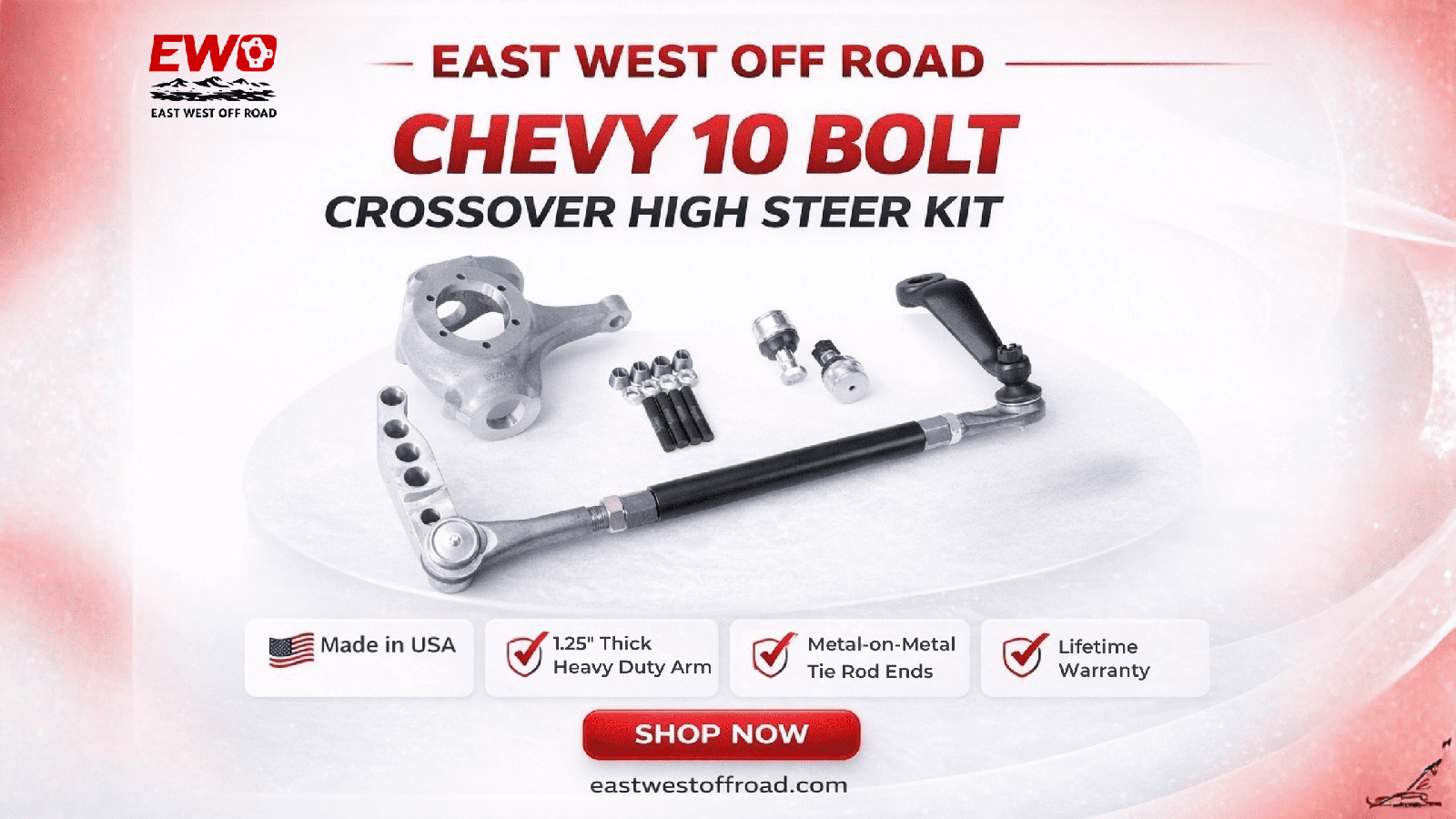
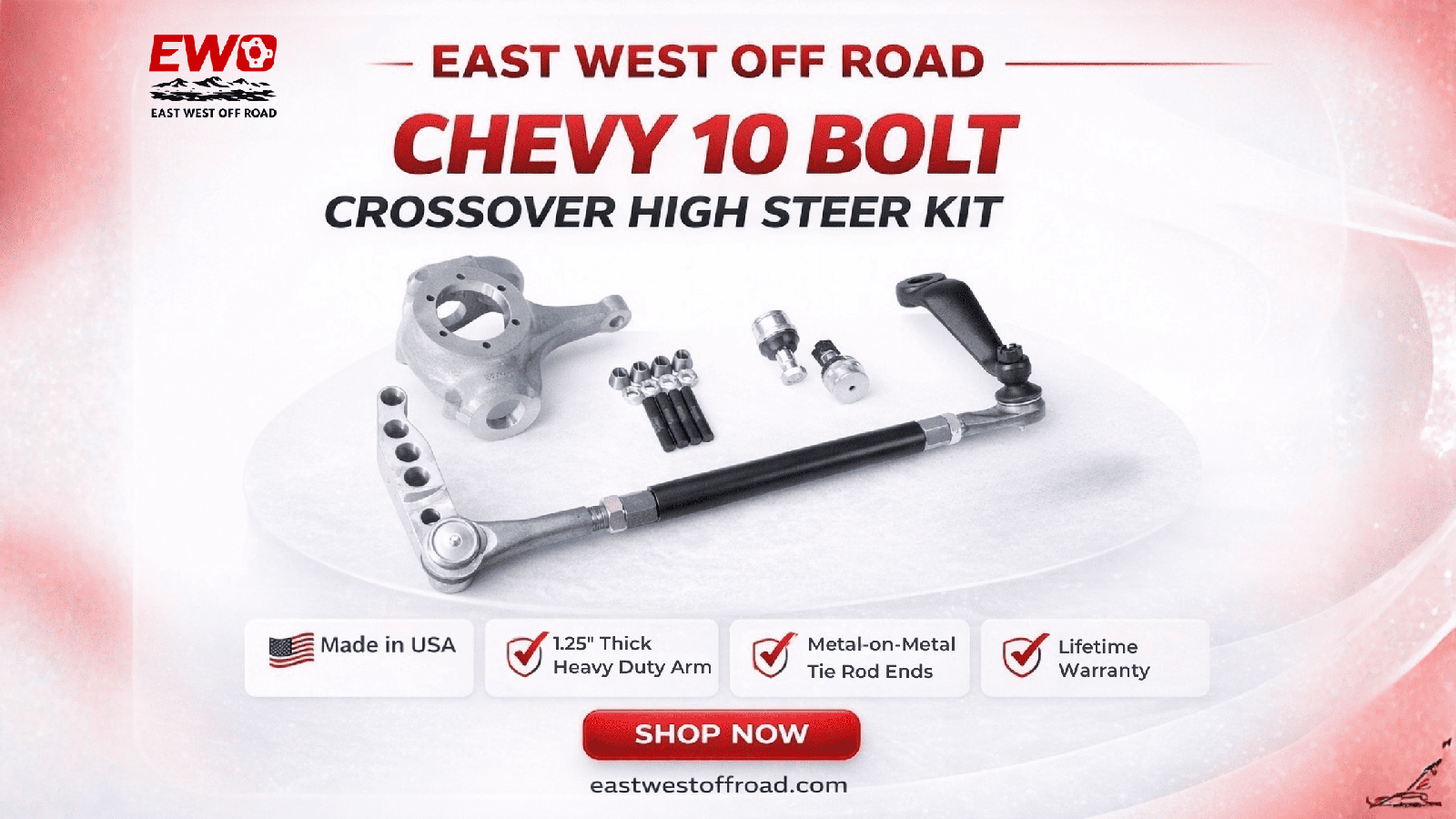
Regardless of the joint you choose, the force remains the same. A 1.25 inch thick high steer arm is essential to prevent the "twisting" motion that both Heims and TREs apply to the knuckle. Because we offer a lifetime warranty high steer arm, you can wheel hard knowing that the connection to your Dana 44 Chevy 10 bolt knuckle kit is the strongest part of your steering.
Conclusion: Choose Based on Your Terrain
If you drive your rig to the trail and want a quiet, predictable ride, go with 1-ton tie rod ends. If your rig lives on a trailer and you need every inch of suspension flex to conquer the "big rocks," go with Heims.
Whatever you choose, we have the hardware to support it.
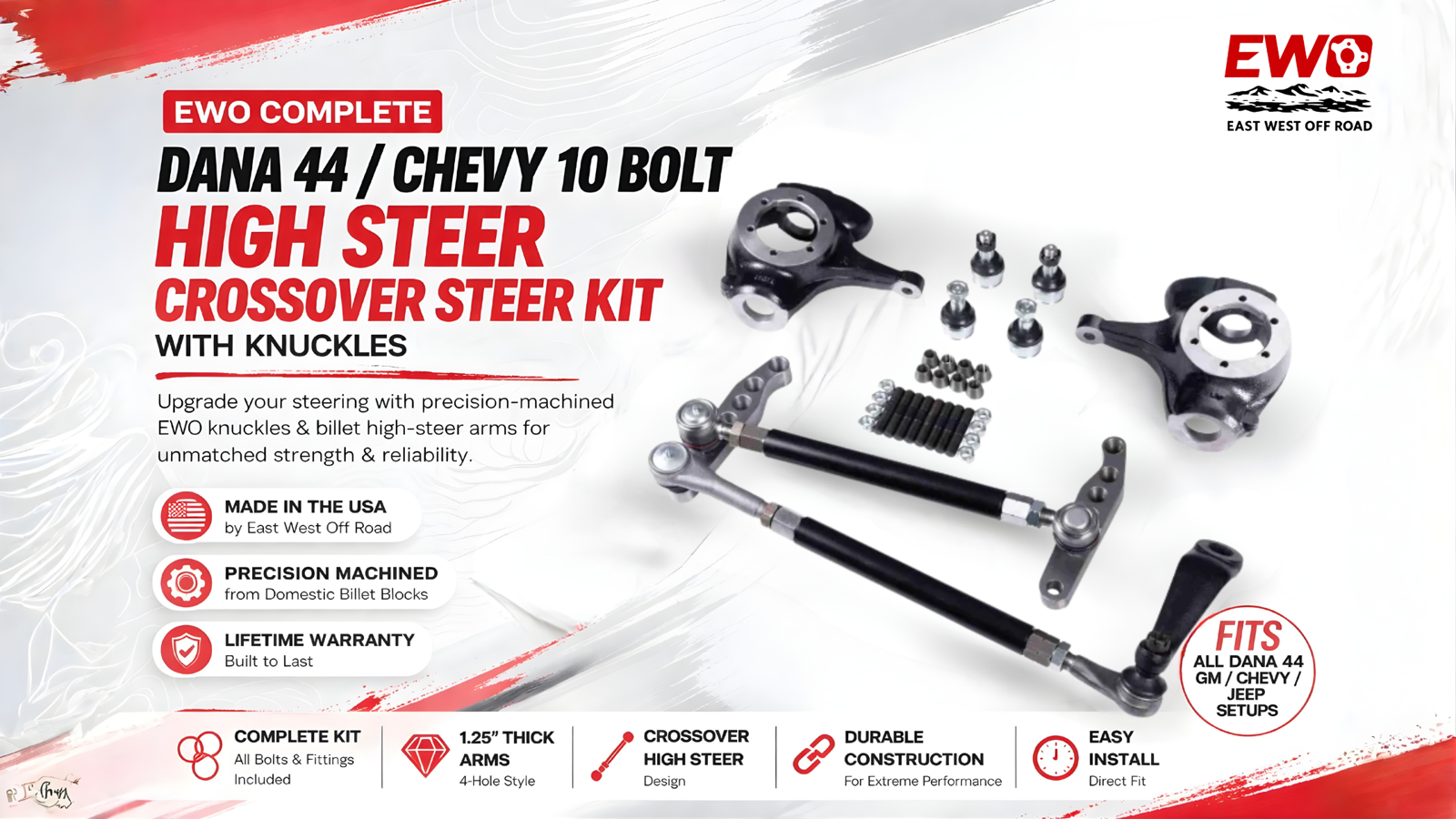
Shop our Complete Chevy 10 Bolt & Dana 44 Knuckle Arm Kits and pick the insert that fits your build style.
Need help deciding which joint size to use? Contact our tech team for a recommendation: info@eastwestoffroad.com


Write a comment ...